Who this article is for:
Entrepreneurs, business owners, and marketing leaders who feel stuck in a “price war” strategy and want to transform their business from a replaceable service into an instantly recognizable, high-loyalty brand.
What’s inside:
- Understanding the three levels of branding
- Why consumers demand more than just a product
- How to uncover and create your brand’s “why”
- Brand audit tools like the “So What?” exercise and the “We vs. You” homepage test
Key takeaways:
- In a crowded market, customers stop comparing specs and start looking for “brand meaning”: a connection to who they are and what they value.
- Businesses must move from the basics to secure lasting loyalty and higher profit margins.
- Trust matters: 71% of consumers prefer brands that align with their values, and 81% say trust is a major factor in purchasing.
- Creating a story for your business makes you 22x more memorable than simply listing facts or figures.
- Build brand meaning by defining your unique personality, finding your ideal customer, and maintaining absolute consistency. Creating a unique identity is essential for fostering brand recognition and building an emotional connection with your customers.
- Meaningful brands can command higher prices and see a 306% increase in customer lifetime value.
Today, with endless sources vying for our attention, we’re all suffering from choice overload. From what’s for dinner to who handles our finances, modern marketplaces are saturated. Every day, your potential customers are overwhelmed with messaging: faster service, lower prices, and “we do it best” promises.
And when customers are spoilt for choice, they tend to rely on one thing: brand meaning.
Brand meaning marketing is the strategy of moving beyond your “what” (what you sell or offer) and transitioning to your “why” (connecting with who your customer is). The key to building a business that is instantly recognizable and deeply trustworthy? Stop selling features and start building a message that actually clicks with your customers.
What Exactly is “Brand Meaning” Marketing?
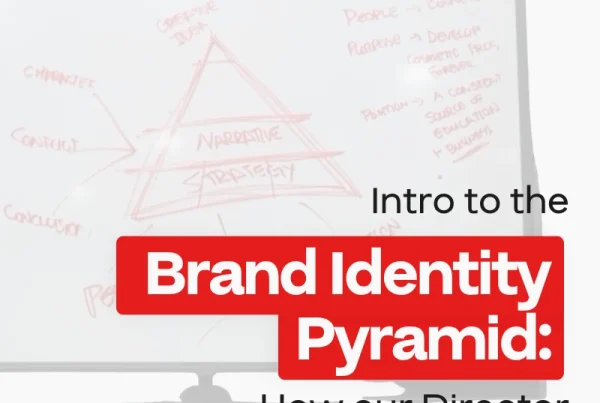
Taking your marketing (and your business) to the next level means climbing the marketing ladder, going from talking about the basics (like prices) to a full branding identity. Let’s see what climbing the ladder gets you and where brand meaning marketing lives.
Level 1: Focused on Features
If your marketing strategy is centered solely around the features you offer (your “what”), you’ll always get lost in the crowd. This space is packed: all of your competitors are touting the same features, leaving your customer no reason to give you business. Especially if the other guy has a coupon.
Historically, branding has played a crucial role in product marketing by helping businesses and artisans differentiate their offerings and establish a unique brand identity over time.
Here, there’s a ton of competition and low profit margins.
Level 2: Loaded with Benefits
Let’s say you level up and start focusing your marketing on the actual benefits your customer gets from doing business with you. This is a big jump, because now the conversation is focused on your customers’ needs. Understanding your target market is essential for tailoring benefits and messaging that truly resonate with the right audience.
Think of moving from “We’re available 24/7” (your feature) to “You never need to worry about your website going offline again” (their benefit).
This is a great start, but these benefits could still eventually be matched by your competitors. That means you may win the business of your customer, but they might not be all-in for the long haul.
Level 3: Give It Meaning
The highest level of branding (and where brand meaning marketing sits) is giving your business an identity. You aren’t just providing a solution to a problem; you’re telling a story of who your customer is. Defining your core identity ensures your brand remains consistent and authentic over time.
Here, your brand means something to your customer because you share the same beliefs and values. They are loyal to you because you’ve built a real, genuine connection that meshes with who they are on a personal level. A clear brand promise communicates the core assurance or commitment your brand makes to customers, further strengthening trust and loyalty.
At this level, people are willing to pay 10x more for a product that means something than one that just works.
Why Your Customers Demand More Meaning
Today’s marketing isn’t about the biggest budget or being the loudest about your offerings. Your customers are more informed (and distracted) than ever. How consumers perceive your brand can significantly impact their purchasing decisions and long-term loyalty. It’s not just about what gets the job done; it’s about the meaning behind it.
Personal Value Alignment Has Power
Recent research shows that 71% of consumers want to buy from brands that align with their values. Spending money with you is sharing a purpose with you. When you focus solely on your fast service or cost, you’re missing out on this huge chunk of business. Sharing your brand’s story helps customers connect with your purpose and values on a deeper level.
Trust is King
Leading with a clear, trustworthy brand story helps to remove risk from your customers’ minds. And with 81% of buyers saying that trust is a deciding factor in their purchasing, building trust with consumers is extremely essential for your business. Brand trust is built through consistent delivery on promises and positive customer experiences, making it a key factor in purchasing decisions.
Meaning is Memorable
Your customers hear brand messaging all day, every day. Hearing more feature-based marketing just adds to the noise. That’s why when information comes with a story or meaningful narrative, it’s 22x more likely to be remembered than just simple facts and figures. That’s a real advantage over your competitors. Strong storytelling not only increases memorability but also enhances brand recall, making your brand top-of-mind when customers are ready to buy.
How to Create Your Brand Strategy and Meaning
Now that you understand how vital brand meaning marketing is for your business, you need to develop your meaning.
Here are the steps to help you get it right: Developing a clear brand strategy is essential for guiding these steps and ensuring consistency in your brand’s meaning.
Step 1: Find your brand’s personality.
The first step to creating your brand meaning is finding the human side of your business. A brand’s personality is the set of human-like traits and characteristics that shape how your brand is perceived. If your brand were a person, how would it make people feel? What would they say? Go back to why your company was started, its original mission, or the problem it was meant to solve. That’s your jumping off point.
Step 2: Who is your ideal customer?
Now, because this exercise is all about moving to the values and needs of your customer, you need to identify who your ideal audience is. Clearly defining your target audience allows you to tailor your messaging and branding to resonate with those most likely to become loyal customers. What are their core beliefs? What do they think and feel? What is their ultimate problem they need to solve?
Step 3: Create your story.
Armed with this knowledge of both who you are and who your ideal customer is, you can now develop your brand’s narrative. Crafting a clear brand message ensures your identity, values, and attributes are communicated effectively to your audience. This is where you’ll distill your story down to its most essential parts by crafting an elevator pitch that focuses on the meaning behind your offerings.
Step 4: Make sure you’re consistent.
Once you have your meaning solidified, you need to ensure you’re telling a unified story everywhere your branding shows up. Do your logo, colors, and messaging all sound and look the same? Establishing brand guidelines helps ensure consistency and cohesion across all visual and communication channels. Are you amplifying the same story? Are your employees all on board?
Is Your Brand Making Connections? Take an Audit
If you feel like your marketing just isn’t cutting it, and you’re constantly competing on price or focusing on your features, you probably aren’t connecting with your customers.
Use the following audit to see if your current branding hits the mark. Measuring brand impact through audits and customer research helps you assess the effectiveness of your branding strategies.
The “We” vs. “You” Homepage Test
Go to your website’s homepage and take a look at the first three scrolls. How many sentences start with “we” or “our,” and how many begin with “you” or focus on your customers’ feelings?
Tip: The ideal ratio of customer-centric “meaning” statements to company-centric “feature” statements is three-to-one.
Analyzing your homepage messaging can reveal the brand associations your customers are likely to form, which directly influences their perception of your brand and their loyalty.
The “So What?” Exercise
To really dig into your brand meaning, you have to get past your primary offerings. To do this, take your biggest feature and ask “so what?” three times.
For example:
Your service: We offer 24-hour customer support.
So what? You can get help whenever you need it. (Feature)
So what? If your site goes down at 3:00 AM on a Sunday, it gets fixed immediately instead of waiting until Monday morning. (Benefit)
So what? You’re never alone in your business. Regain freedom, confidence, and unshakable peace of mind. All the time. (Meaning)
Identifying your brand’s distinctive feature helps set you apart from competitors and reinforces your unique value proposition.
Internal Alignment Check
Developing and amplifying your brand meaning marketing starts on the inside. Brand owners play a crucial role in safeguarding brand equity and ensuring internal alignment with the brand’s purpose. If your team doesn’t understand your brand’s personality, it’s hard for your customers to get it.
Here’s the test:
- Ask five different employees from various departments to describe the company’s “why” in one sentence.
- If your team gives five different answers, your authentic voice hasn’t been shared (and accepted) yet.
- Why does this matter? Companies with high alignment on brand purpose see 30% higher employee productivity. (And significantly higher customer satisfaction scores.)
Personality Perception Test
You may think that your brand is conveying one thing, but your customers may have a completely different perception of you. If your brand were a person walking into a room, how would your customers describe them?
- Baseline: The transactional personality. If they would say “efficient, professional, and expensive,” this, unfortunately, is a brand with zero meaning.
- Goal: The meaningful personality. If their response were “empathetic, adventurous, and a trusted partner,” you’ve found your brand meaning. Achieving this level of connection leads to increased customer loyalty and long-term business success.
- How to get answers: Take a survey of your top 10% of clients. Ask them to describe the feeling of working with you. If all of the answers are functional (think “fast, responsive, etc.”), you’re missing your unique marketing personality.
Why Meaning Matters: The Data
At the end of the day, why does brand meaning matter? It’s an essential tool for your long-term growth and revenue. Let’s take a look at the numbers:
- Your Customers’ Lifetime Value (CLV): Customers who find meaning in a brand have a 306% higher lifetime value than those who are just satisfied with the product.
- Your Pricing: Brands with meaning can often charge 15 to 20% more than their competitors because the customer is paying for the identity associated with the brand, not just the feature.
Building a meaningful brand is also a proven driver of financial success, enabling higher revenue and sustainable growth.
Get Expert Help Developing Your Brand Meaning Marketing
Discovering, developing, and amplifying your brand meaning isn’t always a quick and easy process. But it is essential to your marketing plan. Effective brand marketing combines strategy, storytelling, and consistency to build lasting recognition and trust.
Big Red Jelly is here to help you create a foundation of recognition and trust through our strength in strategic, emotionally grounded brand-building. With years of experience delivering measurable results for clients across various industries, you can trust in our expertise to increase customer awareness, recognition, and loyalty. Our comprehensive approach ensures your brand identity, emotional connection, and core messaging blend seamlessly to really reflect your brand’s personality.
Reach out to our experts today for a free quote and build your branding (with meaning).
Frequently Asked Questions About Brand Meaning Marketing
What is the difference between brand identity and brand meaning in brand marketing?
Think of brand identity as the “body” of your business. It’s your logo, color palette, fonts, and the overall visual style. These brand assets help reinforce your brand identity and ensure consistency across all touchpoints. Brand meaning is the “soul.” Identity is what people see; brand meaning is what they feel and believe about your business.
Why should I focus on brand meaning marketing instead of just listing my product’s benefits?
Benefits (like “we save you time”) are logical and persuasive but are easily copied by competitors. A focus on the features means the only way to win is to be the cheapest. Brand meaning connects with a customer’s identity or values, so they aren’t just buying a tool; they are joining a community. This emotional connection fosters brand loyalty, leading to repeat purchases and long-term customer relationships.
Is brand meaning marketing only for big corporations like Apple or Patagonia?
Actually, brand meaning is often more effective for small-to-medium businesses. Large corporations often struggle to feel “human” or authentic. As a smaller business, you have the unique ability to lean into your unique personality that still feels personal and accessible. A small brand with deep meaning has a massive competitive advantage. Launching a new brand or rebranding can help small businesses differentiate themselves and connect with specific market segments.
How do I actually measure the ROI of "brand meaning"?
While brand meaning sounds abstract, its impact shows up in three very concrete metrics: Building a measurable brand allows you to track and optimize your branding efforts for maximum impact.
- Customer Lifetime Value (CLV): Meaningful brands see a 306% higher CLV because customers stay for years, not just one purchase.
- Referral Rates: People are 22x more likely to remember and share a story (meaning) than a list of facts.
- Profit Margins: Brands with strong meaning can charge up to 15–20% more because the customer is paying for the “identity” associated with the brand, not just the service.
How do I know if my business is currently without a brand meaning?
The easiest way to tell is to look at your messaging. If your website and pitches are dominated by “we” statements (think “We have 20 years of experience,” “We use the latest tech”), you likely aren’t using your brand meaning. If you manage multiple brands under the same company, it’s important that each brand reflects the core values and meaning of the parent organization.