After nearly a decade running a marketing agency, and a whole career in this field, I’ve heard the phrase “target audience” more times than I can count. Years ago, a mentor of mine used to give me a hard time for saying it.
Target audience refers to a specific group of people with shared characteristics, demographics, or interests, whose needs, behaviors, and decision-making factors are considered when tailoring marketing strategies.
He pointed out that a lot of our industry’s lingo actually comes from military veterans who got into marketing after WWII. That’s why we talk about “campaigns,” “boots on the ground,” and “target audiences.” There’s nothing wrong with those words, but they shape how we think. Many businesses still try to reach a broad audience through mass marketing strategies, using channels like radio, television, and newspapers to connect with as many people as possible. However, more effective results often come from focusing on a specific group that shares common traits or interests. Targeting sounds like something you do to people. Finding your Ideal Customer is something you do for them.
The Problem with Traditional Customer Personas
In the marketing world, we are taught to create “customer personas.” You’ve seen them before: you’re selling skin products, so you create “Becky,” a 25-year-old college student in Texas who likes riding bikes and cares about her peers’ perceptions.
Here’s the hard truth: Becky isn’t real. If you build your whole brand around a made-up character, you’re not actually talking to anyone. I’ve never liked the idea of basing a big strategy on someone who doesn’t exist. Instead, let’s look at the real people who are already connecting with your brand. When developing buyer personas, it’s crucial to use demographic data from existing customers and current customers to ensure accuracy and relevance. Real data always beats a fake persona. Conducting market research, including using focus groups, helps you gather insights from real people and understand your current customers more deeply.
Leveraging the Pareto Principle (The 80/20 Rule)
The best way to find your ideal customer? Use the Pareto Principle. It’s the classic 80/20 rule: 20% of your customers drive 80% of your results. This rule shows up everywhere in business.
These top 20% are often your loyal customers and represent your most valuable market segments. Some businesses may have multiple target audiences or specific segments within their broader customer base, each with unique behaviors and preferences. By focusing on the right target consumers within these groups, you can drive business growth and optimize your marketing strategies.
Real-World Pareto Examples:
If you want to scale fast, focus on your top 20%. These are your Ideal Customers—the ones who love what you do and make your business thrive. Double that group, and you don’t just grow. You take off.
Why “Niche” is Not a Dirty Word
A lot of business owners worry that narrowing their focus means missing out. They think, “If I only talk to one group, I’ll lose sales.” But the truth is, the opposite happens. Effective audience targeting helps you reach the right audience, ensuring your marketing resources are used efficiently and not wasted on uninterested groups.
The Statistics of Specificity:
Higher Conversion
According to industry benchmarks, personalized, highly targeted marketing campaigns can deliver a 5x to 8x ROI on advertising spend compared to “spray and pray” methods. A well defined target audience and precise audience targeting are key to successful marketing campaigns and ad campaigns.
Lower Acquisition Cost
When you know your tribe, you stop wasting money on broad, expensive keywords. You show up right where your best customers are. That can cut your acquisition costs in half. Effective audience targeting leads to a more effective audience for your marketing efforts.
Brand Loyalty
A Bain & Company study found that increasing customer retention by just 5% can boost profits by 25% to 95%. Your “Ideal Customers” are the ones who stay.
It’s important to distinguish between your broader target market—the larger pool of potential customers—and your specific target market or well defined target audience. Focusing on the right audience through effective audience targeting ensures your marketing campaign and ad campaigns are tailored for maximum impact.
Four Steps to Identifying and Engaging Your Ideal Customer
01. Start with the Data (The Quantitative)
Don’t guess—check the numbers. Dig into your CRM, Google Analytics, and order history. Use AI tools like ChatGPT or Gemini to spot patterns in your customer data. Market segmentation is essential—divide your broader audience into distinct market segments based on demographic data, geographic, psychographic, and behavioral variables to tailor your approach.
- Geographics: Where are the orders coming from? Are they concentrated in specific zip codes?
- Timing: When are they purchasing?
- Source: How did they find you? (This indicates where they “hang out” online, including which media channels and social media platforms they use).
You can also use tools like SeamlessAI, Apollo, or LinkedIn Sales Navigator to fill in the gaps. Got an email address? These tools can tell you job titles, demographic data, company size, and even how long someone’s been in their role. SparkToro is great for finding out which podcasts your customers listen to and which influencers they trust. Identifying the right media channels and social media platforms helps you understand where your audience spends time and how best to reach each market segment.

02. Prioritize the Art of Conversation (The Qualitative)
We’re drowning in numbers, but we’ve lost the art of real conversation. When was the last time you took a customer to lunch? When did you last call a long-term subscriber just to say thank you?
In addition to direct conversations, use social listening and focus groups to gather qualitative insights about your target audience. These methods help you understand customer relationships, customers motivations, and purchase intention—crucial factors for refining your marketing strategy.
Ask them, “Why do you choose us over the competition?” The answers might surprise you. I’ve seen companies think customers picked them for their “innovative technology,” but really, it was because their support rep always answers the phone right away. That kind of insight can change your whole marketing strategy.
03. Move Beyond Demographics to Psychographics
Age and gender are just the basics. If you want to grow, you need to dig deeper:
- Psychographics: What do they believe in? What are their fears? Analyze the consumer behavior of individual consumers to understand their motivations and preferences.
- Behavioral Trends: What do they do on Saturday mornings? Examining consumer behavior and the actions of individual consumers helps reveal patterns that can inform your marketing strategies.
- Jargon: What words do they actually use? If you talk like a corporate robot to a creative crowd, you’ve lost them before you even start.
Segment your target audience into specific segments, such as age groups and marital status, to better understand their needs and tailor your communication for maximum impact.
04. Define Your Positioning (The Venn Diagram)
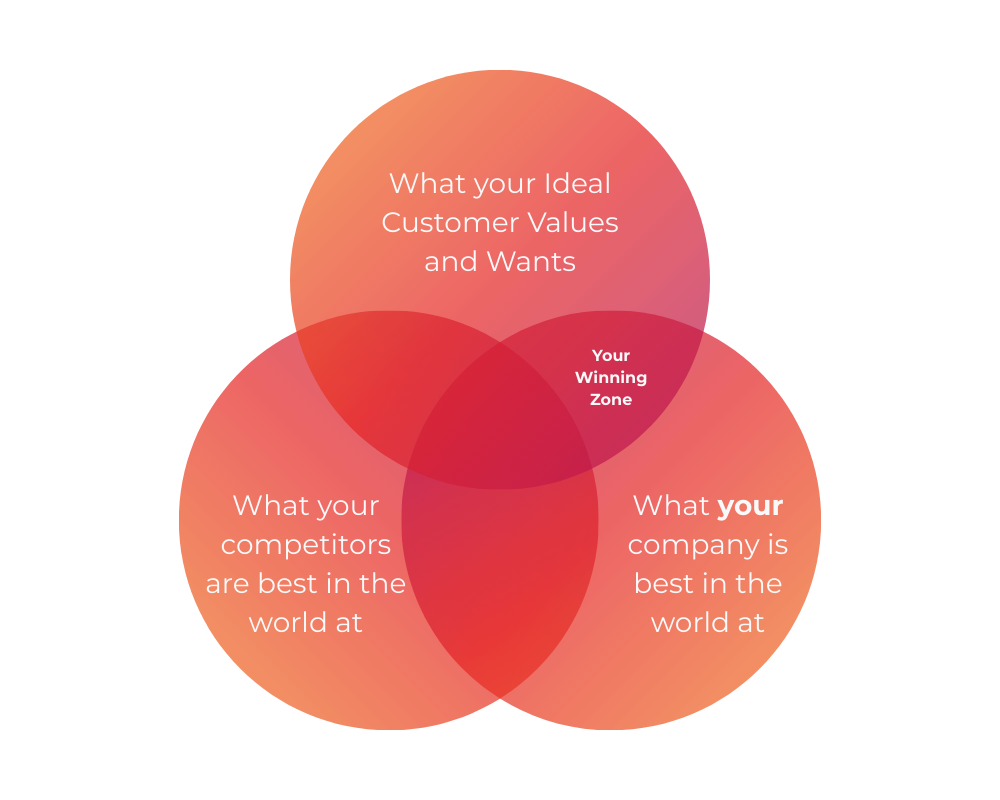
Picture a Venn Diagram with three circles:
- Circle A: What your Ideal Customer values and wants.
- Circle B: What your competitors are best in the world at.
- Circle C: What your company is best in the world at.
Your Winning Zone is where what your customers want and what you do best overlap. That’s where your competitors aren’t showing up, but you are. To maximize this overlap, align your service offerings and products or services with your brand’s target audience. Your business’s product should be positioned to appeal to a particular group or specific target audience that will benefit most from what you offer.
I worked with a plumbing company that found out their customers loved that the techs wore shoe covers inside the house. While everyone else talked about “fast service,” they focused on “respect for your home.” That one small detail became the heart of their marketing because it really mattered to their homeowners’ tribe.
Case Study: The Power of the Tribe
Take Liquid Death. On paper, it’s just water. But they didn’t try to sell to everyone. They went all-in on heavy metal, punk, and skate culture—clear target audience examples that guided their approach. They developed a detailed buyer persona to understand the values, interests, and behaviors of this tribe. Liquid Death created relevant content and crafted marketing messages that spoke directly to their audience’s identity and sense of humor. Their ad campaigns and marketing activities were designed to resonate with this specific group, using targeted outreach and creative strategies that set them apart in a crowded market. By focusing on their top 20%, they built a billion-dollar brand where a generic persona would have flopped.
Refining Your Identity
Once you have defined your ideal customer, you can align your brand:
- Messaging: Use the adjectives and verbs your customers use. Speak their language. Tailor your marketing communications to different stages of the sales funnel and purchase intention to ensure your message resonates with potential customers at every step.
- Visual Identity: Consistency beats “prettiness” every time. Consistency builds trust. If your brand looks one way on Instagram and another on your invoices, you’re losing trust.
- Pressure Test: At least once a year, go through your own onboarding. Submit a support ticket to your own team. Find out what it’s really like to be your customer.
Refining your identity not only helps build strong customer relationships but also improves your marketing efforts to better reach and engage potential customers.
The Bottom Line
At its core, marketing is about empathy. It’s knowing who your people are, what they care about, and being part of their world. When you stop chasing people who will never love your brand and focus on the 20% who do, you unlock real growth and momentum.
Are you ready to really find your real target audience?