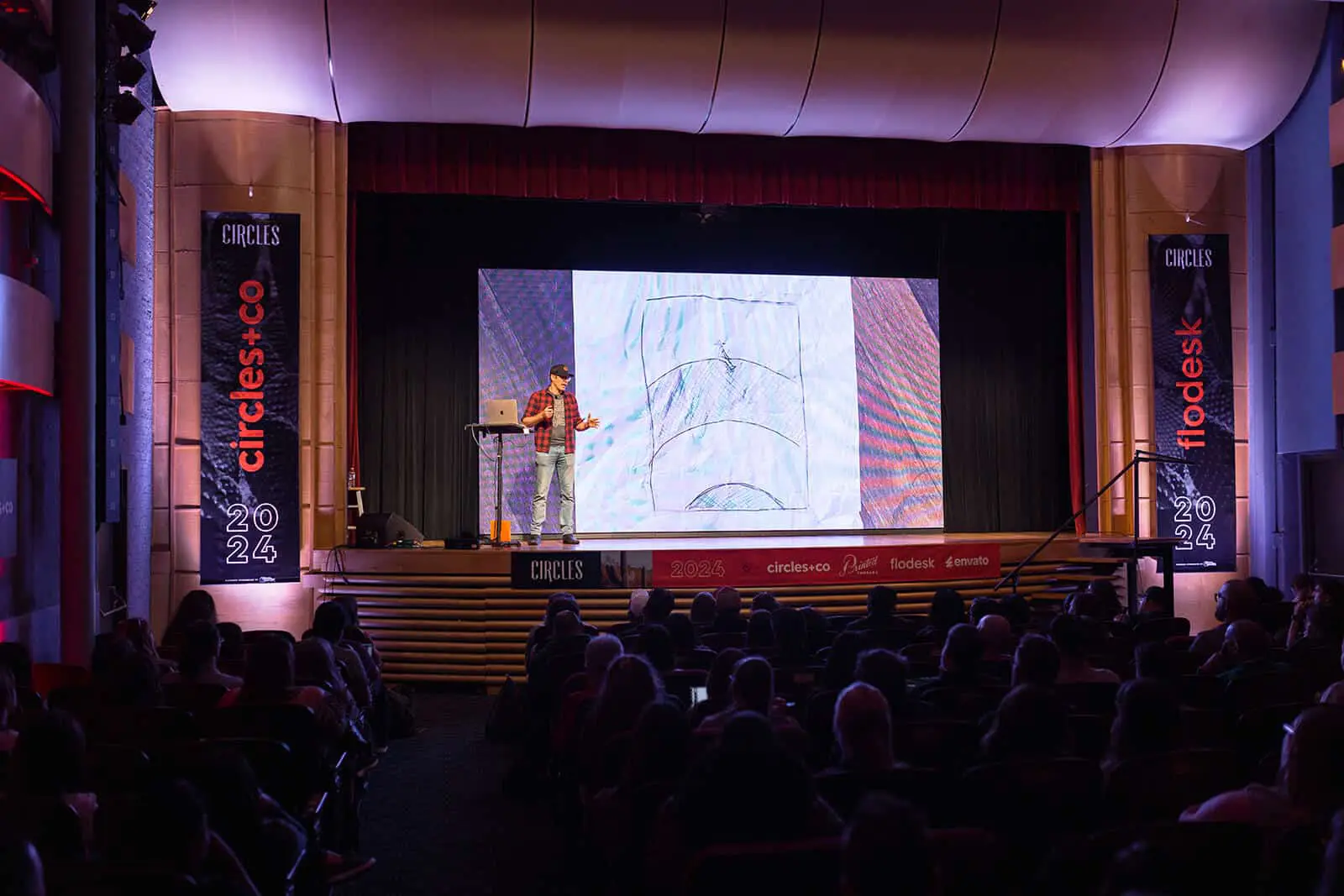
Allan Peters’ recent talk at Circles 2024, titled “Chasing Dreams, Not Dollars: The Power of Letting Conviction Lead Your Career,” wasn’t just a motivational rallying cry for creatives—it offered profound insights into how belief-driven work can lead to tangible success. For those of us in the design world, this approach isn’t only about finding fulfillment; it’s about creating brands and websites that users trust and connect with on a deeper level. Peters’ message is simple: when your work is led by conviction, the end product becomes inherently more meaningful—and, in the case of web design, more trustworthy.
The internet is a crowded space, and users have become discerning critics. They can tell when a brand is genuine and when it’s simply trying to sell them something. As web designers and brand builders, we have the opportunity to help brands stand apart by creating experiences that are grounded in authenticity.
When we design websites with genuine conviction—ensuring every element of the user experience aligns with the brand’s values—we’re doing more than just aesthetics. We’re building trust, which ultimately drives user action and conversion.
Designing with Authenticity: The Power of Conviction
Peters’ emphasis on conviction offers a lesson on why it’s so crucial to embed purpose into the very fabric of web design. Design choices shouldn’t be dictated solely by fleeting trends or by which button color has the highest click-through rate—they should be driven by the brand’s core values and the emotions they want to evoke in their audience.
Allan Peters’ own career pivot exemplifies this perfectly. After experiencing a life-changing event—being shot during a violent incident—Peters made the choice to leave his demanding ad agency role to pursue more purpose-driven work. Instead of letting that traumatic event break him, it became a catalyst for change, pushing him to align his career with his values. This decision eventually led him to work in-house at Target, where he could focus on work that resonated with his belief in creating authentic brand experiences. This story is a powerful reminder that conviction can lead us to the kind of work that not only fulfills us but also has a deeper impact on others.
Take, for example, the design of a homepage. A belief-driven approach means crafting messaging that reflects what the brand truly stands for, complemented by visuals that evoke the essence of the brand’s story. When conviction leads the process, users sense the authenticity in every aspect—from the visual identity to the content tone. This builds trust, because users perceive that the brand isn’t just out for a quick sale, but rather to establish a genuine connection.

Purpose-Driven Design Elements that Foster Trust
In practical terms, conviction-led design requires a focus on a few core principles:
Clear and Honest Messaging
When the messaging on a website is honest, clear, and avoids manipulative language, it shows users that a brand respects their intelligence. Allan Peters often speaks about the power of storytelling—using narrative not as a tool for mere persuasion, but as a means to genuinely communicate a brand’s journey and mission. Authentic storytelling on a website builds an emotional bridge, making users more likely to trust and engage.
Peters shared how, during his time at Target, he chose to focus on brand-building campaigns that didn’t prioritize pushing products or quick sales. Instead, he worked on projects that showcased the brand’s identity and culture without any overt call-to-action. This decision, driven by conviction, helped position Target as a brand that users could identify with on a deeper level—proving that focusing on authenticity over short-term gains can lead to greater brand loyalty and recognition.
Intuitive User Experience
A belief-driven website is designed with the user’s best interests at heart. Navigation is straightforward, buttons make sense, and content is easy to find. Instead of hiding critical information behind dark UX patterns or confusing designs, these websites are designed to empower users. Peters’ concept of “chasing dreams” can be translated here into an ethos of providing value upfront, ensuring users feel that their needs and desires are understood.
Visual Consistency with Values
Conviction-led design is also about ensuring that the visual language of a brand is consistent with its core values. If a brand positions itself as eco-conscious, for instance, using earthy color palettes, natural imagery, and avoiding over-the-top, cluttered elements can create a feeling of calm, stability, and trust. When a website looks and feels the way a brand speaks, it shows that the brand’s message is sincere—not just lip service.

Peters also shared a powerful story about his early days at Target, where he took a risk by pitching an unconventional campaign idea involving a character basking in the sun atop the Target bullseye. Despite initial resistance, Peters stuck to his conviction, and the campaign eventually became one of Target’s core branding pieces, earning awards and solidifying the value of the in-house design team. This example highlights how staying true to one’s creative instincts, even when it means taking risks, can lead to standout work that resonates deeply with users.
Allan Peters’ personal work is an excellent demonstration of how conviction can shape a unique and consistent brand identity. His Instagram page and personal ad portfolio showcase numerous examples of his design philosophy in action—from bold, clean visual branding to heartfelt, purpose-driven storytelling. These platforms highlight how Peters uses design to connect authentically with his audience, allowing his conviction to be the guiding force behind his creative work. You can explore his work on Instagram and his personal ad page.

The Impact on Conversion
Trust is the linchpin of conversion. When users trust a brand, they’re not only more likely to make a purchase—they’re also more likely to return, refer others, and become loyal advocates. Allan Peters’ message on letting conviction guide one’s career can be a game-changer for designers aiming to create websites that do more than just look good. By building conviction into the very framework of a website, we help brands speak to users in a way that feels genuine and trustworthy—ultimately leading to higher conversion rates.
Instead of following cookie-cutter approaches or obsessing over small tweaks that might improve metrics in the short term, a belief-driven design approach is about the bigger picture—creating websites that users want to engage with because they trust the brand behind them.

Designing for the Long Run
Allan Peters’ career is proof that chasing dreams and staying true to one’s convictions can lead to long-term success. For web designers, that means focusing less on instant results or following every trend and more on creating with purpose. Peters’ decision to leave a demanding ad agency job and move in-house at Target allowed him to better align his professional work with his personal values, ultimately leading to both professional success and a more fulfilling personal life.
He shared how this change allowed him to be more present for his family—he started making breakfast for his children, spending time with them, and still finding ways to work on projects that mattered to him creatively. By pursuing conviction-led work, Peters was able to design a life where both his career and family thrived. This story serves as a reminder that when we prioritize authenticity and conviction, we create websites that do more than convert—we create websites that matter, and we build lives that are genuinely fulfilling.
By letting conviction lead, we’re not only making a career choice that brings fulfillment, but also delivering products that resonate with people on a human level. And that’s what truly turns visitors into loyal users.