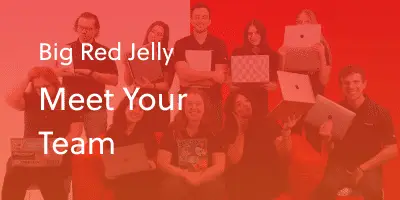
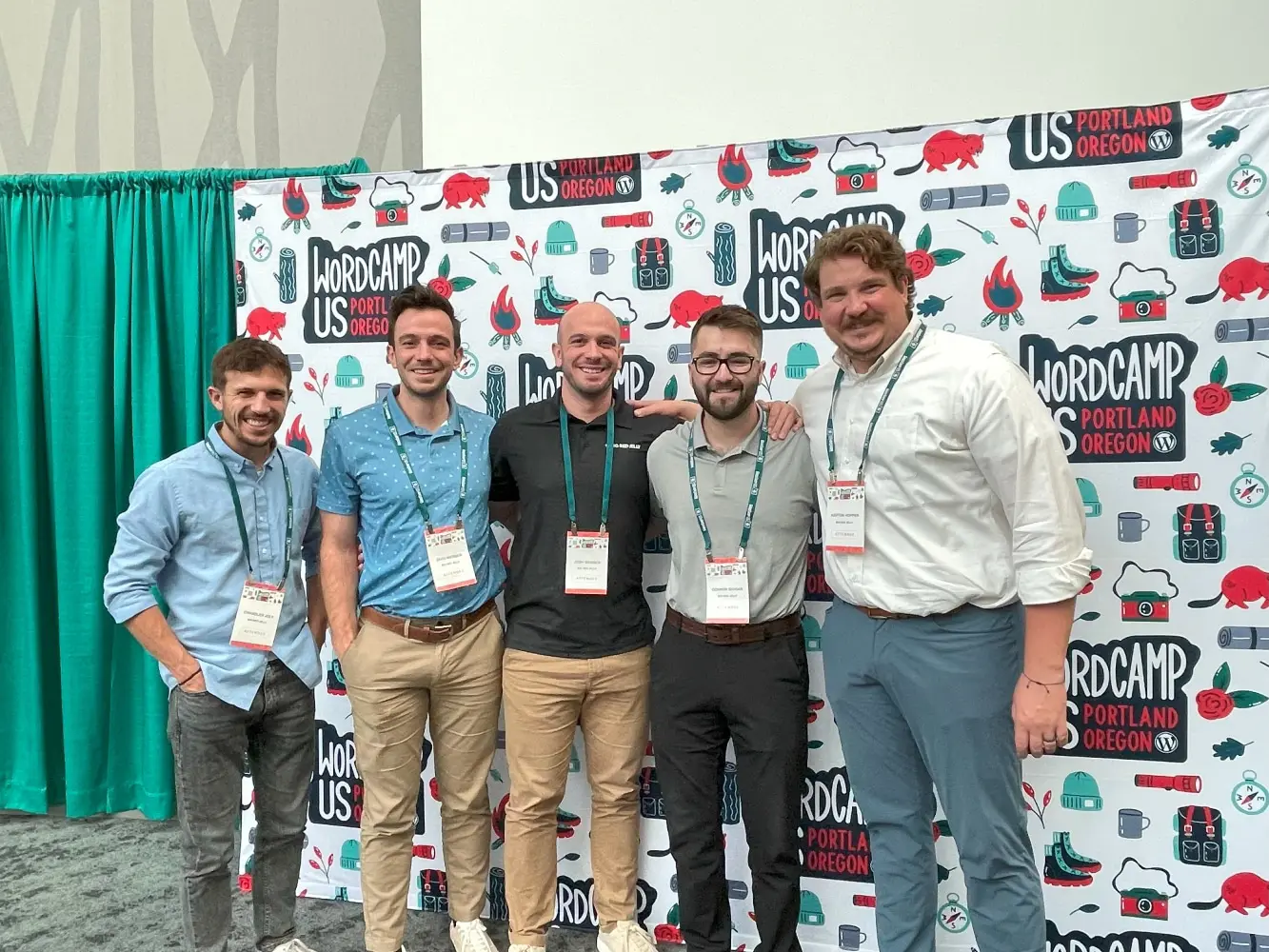
What has the big red jelly team been up to? The team got the exciting opportunity to attend the Word Camp event last week in Portland, Oregon. The team got to hear from many different professional speakers, including the Co-founder of WordPress, Matt Mullenweg. This experience allowed the team to hear from a selection of top industry leaders. They were also able to network with talented individuals involved in web development, creating connections that can hopefully lead to future work opportunities.
Matt Mullenweg: Insights on WordCamp US and the Importance of Open Sourcing
Matt began by reading a blog post he wrote, sharing his goal of bringing more art into WordCamp Us. He emphasized that WordPress was created to be about creation. To provide some background, WordPress is an open-source content management system that allows users to easily manage, create, and customize websites. This flexibility enables individuals and businesses to design everything from simple blogs to complex e-commerce sites. Matt highlighted that this focus on creation aligns with his vision of integrating more art into WordCamps, fostering creativity within the community.
He talked about the ongoing process that happens in business is something he calls ‘Ecosystem thinking.’ Ecosystem thinking involves four important steps:
-
Learn
-
Evolve
-
Teach
-
Nourish
First, learning involves having a beginner’s mind, which means being curious and engaging with new ideas. Exploring these ideas leads to innovation and greater collaboration with others. Second, the next step is to evolve, which means actively applying the new ideas. This involves testing our concepts and learning from failures and challenges. Third, we must teach the new ideas we’ve evolved and continue learning in the process. Matt mentioned that he has always learned more from teaching. Teaching helps reveal our weak spots on certain topics because we need to be well-informed to help others effectively. It’s important to open-source our knowledge so that others can follow our path.
Lastly, we must focus on nourishing our community. Just as a garden requires consistent care and attention to thrive, we need to invest time and effort in supporting one another. By fostering a community where everyone can share their knowledge and resources, we create a space where collective success is achievable. He mentioned the importance of creating something that lasts a generation, rather than just extracting information. What we create is bigger than one person, it takes many people with different ideas to come together to make it come to life.
WP Engine vs. Automattic and WordPress
Currently, several private equity firms claim to support open-source management systems but often do not. One such firm, Brand Silver, has recently become involved with multiple open-source management systems. The company that WP Engine poses a significant risk to the sustainability of open-source communities, particularly affecting the WordPress ecosystem and Automattic.
For more information on the ongoing controversy regarding WP Engine and its implications for open source, we encourage you to read the article: Open Source, Trademarks, and WP Engine.
The Difference Between a Founder and a CEO
Founders typically have an underlying passion that drives their vision and innovation, while CEOs often focus on profit and revenue. This can create friction, as the founder’s deep commitment to their mission may clash with the CEO’s more financially focused approach to business operations.
To bridge this gap, CEOs should strive to maintain that same passion, ensuring it translates into company culture and values. They can do this by actively engaging with the founders, understanding their vision, and integrating it into strategic decisions. Encouraging open communication, creating a collaborative environment, and aligning goals can help both parties work together more efficiently.
The Importance of Brand Purpose, Vision, and Mission
Another significant takeaway from WCUS 2024 was the importance of a brand’s purpose, vision, and mission. These elements serve as your compass, enhancing both your business and company culture. They also positively impact client interactions. Let’s take a closer look at why these components are crucial for your business:
Brand Purpose
Brand purpose defines who you are as a brand and what you stand for. Here are some questions to consider:
- What is your business?
- Who are you customers?
- What are you trying to accomplish?
Vision
Having a vision involves creating new ideas for the future on how to help your business evolve.
- What can we do to improve our overall brand awareness?
- How can we stand out against competitors?
- What are creative solutions we could implement?
Mission
Your set measurable goals for your business and the steps you will take to achieve them.
- What goals do we have for the next quarter?
- What long-term goals do we want to achieve in the next year?
- What specific strategies will we implement to reach these goals?
Be Brave in Today’s Business Climate
Being a business in today’s climate can be a challenge. The market is oversaturated with countless companies competing for attention, making it difficult to create a unique identity and make your brand stand out. With consumers bombarded by options, it’s essential to separate yourself in a meaningful way.
This is why taking risks and being brave is more important than ever. Embracing innovation, whether through new marketing strategies, creative product offerings, or bold branding choices, can help capture the interest of your target audience. It’s about stepping out of your comfort zone and exploring uncharted territory, even when the path may seem uncertain.
Shoutout to Our Partners!
We want to take a moment to give a shoutout to our current partners, whose support enables us to do what we love. It was fantastic to see Automattic, WooCommerce, and WordPress at the event. Their presence added great value and insight to our experience. Their collaboration is essential to our success and helps us deliver great results for our clients. We’re truly grateful for their trust and look forward to achieving even more together in the future!
Celebrating Our Team at Big Red Jelly and Highlights from WCUS 2024
Our team at Big Red Jelly has been working incredibly hard this year. It was a great opportunity for some of our team members to be able to join the WCUS2024 event. At Big Red Jelly, WordPress is used for almost every client we work for, and is a great open source management tool that allows us flexibility and creativity. We will continue to use open-source options because we value community collaboration, which allows us to share ideas and inspire one another to be innovative.


What’s next for us and our clients?
Our next step is to apply the new strategies we learned at WordCamp USA 2024 to our business model. We are committed to continually enhancing our personal skills and improving our business processes. Here are a few of our upcoming initiatives:
- Managing a Sustainable Page During the Build Phase: We learned key techniques for creating efficient web pages that prioritize performance and user experience.
- Best WordPress Tech Partners: We identified top WordPress tech partners that can enhance our development process and improve our service offerings.
Be sure to check out our blog for more articles about our experiences at the event!
Written by Mackensie Ovard