
Who this article is for:
Entrepreneurs, marketers, and branding specialists who want to elevate the branding of their company, gain more brand loyalty, and strengthen their strategy.
Key takeaways:
- Why it’s important to create a cohesive brand guide
- What factors to consider in the creation of a brand guide
- The “why” behind branding, brand guides, and company verbiage
- Importance of factors aside from visuals
- The essentials of brand guide creation
- How to get help in creating your brand guide
Branding your Brand Guide
So you’re creating a brand guide for your company. Maybe you’ve been researching brand guides because you want the style of your logo, fonts, and colors to be cohesive. Maybe you’re expanding your marketing work and find yourself needing things to look the same across social media, paper products, and email signatures.
A brand guide helps internal teams maintain brand consistency and ensures the brand is presented consistently across all channels, making it easier for every department to uphold a unified brand identity.
The reality is that your brand guide is meant to affect more than your stylistic choices. Your actual brand has a purpose: to stand out from the crowd, and to increase your chances of gaining an audience inside increasingly saturated and impersonal markets. A well-crafted brand guide supports brand recognition by ensuring your brand is presented uniformly to audiences, no matter where or how they encounter it. Keeping your brand purpose and goals in mind allows your brand guide to include more than just colors that your marketers are allowed to use. Your brand guide can encapsulate what it’s actually like to experience your brand!
Brand Guidelines
It’s important for all aspects of a brand to be considered in its brand guide. A comprehensive style guide should include all brand elements and provide detailed guidance to ensure consistency and precision across every application. While there are many sites that will make recommendations for your guide, they’re often only considering style and imagery. But there’s more to your brand guide than style and colors! Here are four things to consider for your brand guide, and a brief explanation of why it might be useful.

1. Brand Foundation/DNA/Core
Your brand guide should include some kind of “why”. Your business’s values, foundational traits and goals, as well as the personal voices that affect the brand’s identity. Including your mission statement and core values in the brand guide helps ensure all branding decisions reflect your company’s purpose and guiding principles. Interestingly, the inclusion of this core will be foundational for the rest of your brand guide.
When you know why you’re making creative decisions later for your guidelines, you’ll make decisions that truly align with your goals. Those creative decisions will feel natural rather than forced when you keep your “why” in mind. Defining buyer personas at this stage also ensures your brand guide is tailored to your target audience.
2. Brand Messaging/Verbal or Written Identity
A brand guide should absolutely contain how your brand is represented in written or spoken word. This may include, but is not limited to: taglines, value propositions, mission and vision statements, elevator pitches, and even name meanings. Defining the tone of your messaging helps communicate your brand’s personality and ensures your message resonates with your audience. The words we choose can greatly affect how our brands are perceived. Just think of how you might view everyday brands differently from one another based on their messaging and word choice. For example, when peanut butter brands use the word “creamy” versus “smooth”, or when you think of “brittle” versus “crunchy”.
The connotation of the messaging you have matters, too. It’s important to include what you want things to sound like— the “vibe” of your messaging, so to speak— when creating your brand guide. Your brand guide should also include guidelines for body copy to ensure consistency in written materials across all platforms. Strong, consistent messaging can serve as inspiration for both your team and your audience.
3. Visual Identity
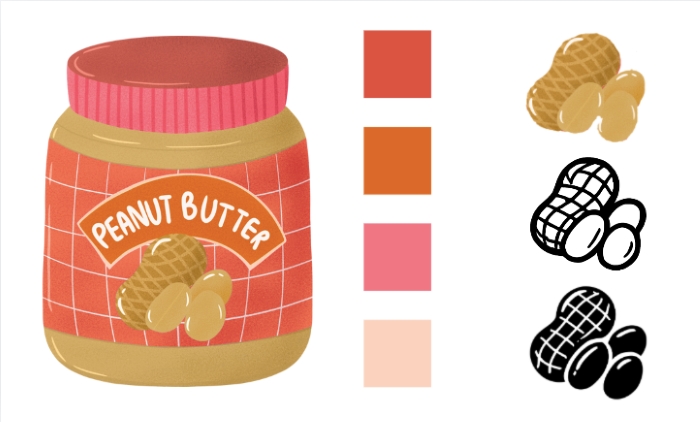
Another piece you might consider for the creation of your brand guide is the visual identity of your brand. This section should include all brand assets such as logos, icons, templates, photography, and other key elements that make up your visual identity. While logos are important, this part of branding is about more than just the little icon you put in the corner of your images. It’s important to specify your brand colors, including providing hex codes to ensure accurate color reproduction across all media. In addition to your primary color palette, consider defining secondary palettes and approved color combinations to create a versatile and consistent brand aesthetic.
You should also provide detailed logo usage guidelines, including rules for spacing, color variations, and misuse examples, and make logo files available for different applications. Consistent typography and design elements are essential to maintain a cohesive look across all brand materials. Having multiple versions of logos and images can be helpful as well—including how they’re used in different color schemes. What is your color palette? What types of text are used, and when? Does the amount of text on one page affect placement, use, or coloring? Are there specific rules or exceptions to these rules?
Remember, the “why” is important to keep in mind when making design choices like these. If you want your brand to have trustworthy messaging, use imagery and photography that will support the image for your brand.
4. Application
After having considered the other aspects of a brand guide, this should be something you consider. How do all these guidelines fit into the imagery on posters? Social media? T-shirts and signage? Office spaces? Your brand is going to go more places than just your guide, and considering how it fits into other spaces will give you a launching point for when it does—or how to improve it if it already has!
To ensure clarity and consistency, your brand guide should cover the application of branding across different projects, including personal design projects, campaigns, and initiatives, as well as across all sub brands within your organization. Include real-world examples and sample pages in your brand guide to illustrate correct application and provide inspiration for best practices. Organizing your guide into clear, well-structured pages will help teams easily find the information they need.
The creative team, along with other teams such as marketing and customer service, plays a crucial role in applying the guide consistently across all touchpoints. By supporting these teams with comprehensive guidelines and resources, you help maintain brand integrity in every context.
Essentials of a Guide
While these are all aspects to consider when creating a brand guide, it’s also essential to keep in mind other key details of your brand, such as:
- Your audience: does this brand appeal to them?
- Your goals: does this brand align with and strengthen them?
- The work you do: does your brand match your quality of work and quality of customer?
Maintaining brand integrity and a professional image is essential for building trust with your audience. Focus on key brand elements to ensure clarity and consistency, and manage your brand assets effectively to support a cohesive identity across all platforms.
Your brand, and the guidelines you create to enforce it, will affect all other aspects of your business. How you market yourself, how you design your website, even how you interact with individual customers is affected by your brand and its voice in your sphere. It becomes critical to lay a strongly branded foundation.
Business Begins with Brand
The necessity of a well-made brand is the reason that Big Red Jelly has “BRAND” as the first step in its Proven Process. Everything about your business begins with Brand. Good design, guided by the expertise of a graphic designer, is essential for building a strong brand foundation and ensuring visual consistency across all materials. Creating a comprehensive brand manual to document your branding elements, visual styles, and application rules helps maintain brand integrity and serves as a valuable reference for your team. Other aspects are important, too—you can’t underestimate the power of strategy. But having a brand made for strategy gives you the launching point you need to go from good to great.
Create a Brand Guide Today—It’s Not Too Early or Too Late!
Looking to create your own brand guide for your business, but not sure where to start? Creating a comprehensive brand style guide is essential to keep your brand consistent across all platforms and materials. With a well-crafted brand guide, you gain complete control over your brand’s presentation and ensure every asset aligns with your vision. Request a quote today to work with an expert team of Brand Strategists at Big Red Jelly!
Frequently Asked Questions About Brand Guides
Why do I need a brand guide?
Brand guides allow for your brand to feel cohesive. If messaging, imagery, and goals seem to align with one another, your customers/clients will feel that they can trust your brand. Having a guideline creates a banner to unite under.
What if I already have an established brand?
Evaluate what values, standards, imagery, and wording you have already used. Find what is most important to you, and use already-established aspects to strengthen your brand in the guide. Creating a brand guide might also give you a chance to get rid of unnecessary aspects of your brand, too.
Is a brand guide the same as a style guide?
While they can be similar, style guides are different from brand guides because style guides are typically only the coloring, logo, and basics of style. Brand guides should include much more information, but can (and should!) include all of those things, too.
How do I have brand personality in a brand guide?
Something amazing about brand guides is they are as unique from each other as the companies they represent. Your unique company, along with its goals, verbiage, and imaging will immediately make the personality begin to come through. That, along with your actual defined personality in the brand guide, will make it uniquely yours, differing from competition.
Should my brand guide be online or physical?
This is entirely up to you and your business! Some places like to have both online and physical copies of brand guides. Both are helpful for different reasons. As a new breakthrough innovation at Big Red Jelly, some clients work with strategists to create interactive brand guides, which expands and enhances the experience of a brand guide.
When should a business create a brand guide?
If you’re asking, it might be time! When you have an idea of what you want your brand voice, messaging, visuals, and goals to be, it’s a great time to put it into words. Even just having a small guide can help your company unite under its banner.
How do brand guides affect a rebrand?
It’s important to refresh your brand at critical points as you expand. Your brand guide may also need to change and refresh with your brand–– that’s ok! Ensure that your messaging and imaging feels familiar and trustworthy, and true to your original brand. Allow the refreshed parts to really flourish.







![A man sits at a desk wearing headphones, partially obscured by a colorful banner reading “[Your Personality Here]” in bold white letters. The background is red and blurred, hinting at his focus as a brand strategist at work.](https://bigredjelly.com/wp-content/uploads/2026/03/Brand-Personality-Examples-Cover-Photo-copy-600x403.webp)
