Who this article is for:
Business owners and entrepreneurs who feel their brand is disjointed or “only skin deep,” and leaders looking to build a high-converting identity rooted in a proven, cohesive strategy rather than just aesthetics.
Key takeaways:
- Branding is a strategic system, not just a logo.
- By establishing verbal elements like positioning and purpose first, you create a “cheat code” for all visual design, ensuring your brand authentically resonates with your target audience and cuts through the competition.
When most entrepreneurs think about brand identity, their minds go straight to the “pretty” stuff: a sleek logo, a vibrant color palette, or a catchy business name. While those are vital brand elements, they are merely the tip of the iceberg.
Imagine an iceberg floating in the ocean. The part you see above the water (the jagged, glittering ice) represents your visual identity. The logo, in particular, often serves as the first interaction a consumer has with your brand, shaping their initial perception. But what keeps that iceberg afloat and gives it its massive weight is the 90% hidden beneath the surface. In branding, that submerged foundation is your verbal identity.
To build a brand that lasts, you have to understand that branding isn’t a single thing. It is a system. It is a combination of visual, verbal, emotional, and experiential components that work together to tell a story. While many components are important, some may be considered the most important element in establishing brand recognition. If your visuals and your verbal foundation aren’t aligned, your brand will feel hollow, confusing, and ultimately, forgettable.
All elements working together is essential for creating a cohesive and memorable brand.
The Cheat Code: Starting with the “Why” and “Who”
Before a single pixel is moved in a design program, every successful brand starts with a series of questions. This is the “cheat code” for effective branding. If you can answer these three questions with crystal clarity, every other brand element will fall into place:
- Who are we selling to? (And what does that person value?)
- What problem are we solving for them? (The “WHY”?)
- Who is competing with us, and what are we doing differently?
Authentic resonance doesn’t happen by accident. It happens when you stop trying to scream at everyone and start communicating to the right people. Defining your target audience is essential to ensure your brand elements resonate and communicate effectively. Your brand starts by identifying the human on the other side of the screen or the counter. Once you know what keeps them up at night and what makes them feel successful, you can begin to build the verbal foundation that speaks directly to their needs. This foundation is what allows you to cut through the noise of your competitors.
The Outer Circle: The Verbal Foundation
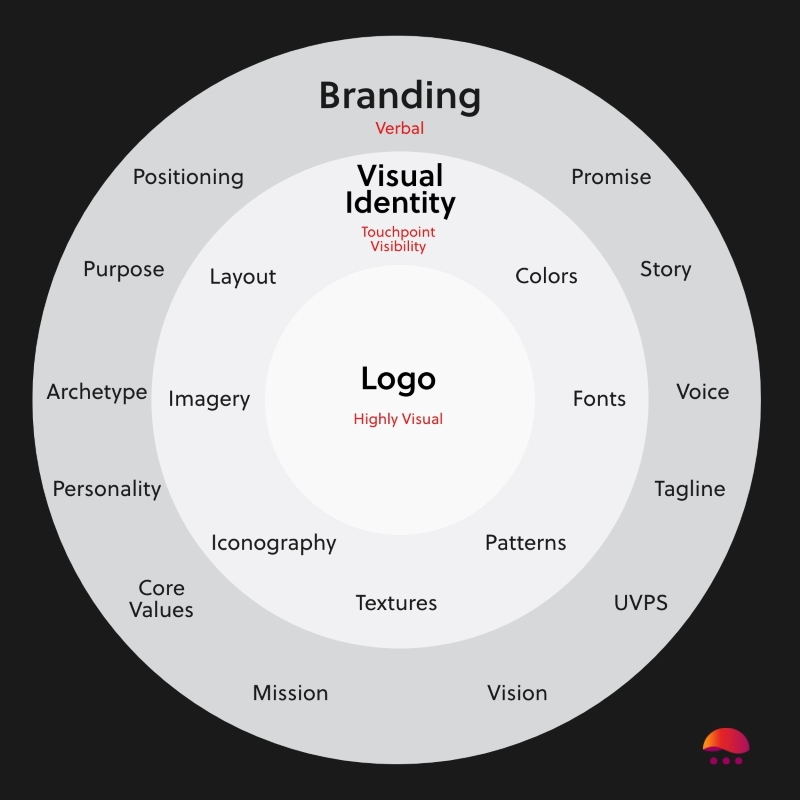
If we look at the brand system as a series of concentric circles as seen in our Verbal vs. Visual diagram, the outermost layer is the Verbal Identity. This is the layer that holds everything together.
Many businesses skip this step because it feels abstract, but this is where the strategy lives. These elements define the “soul” of the business. Defining your brand goals at this stage ensures all future branding efforts are aligned. As shown in the outer circle of our framework, the verbal layer includes:
- Brand Positioning and Brand’s Purpose: How your brand is strategically positioned in the market and the core mission or reason your brand exists beyond making a profit.
- Mission and Vision: Your roadmap for the future and your daily commitment to your customers.
- Brand Values: The core principles and personality traits that are non-negotiable and guide every decision your company makes.
- Brand Voice and Tone: Whether you are the helpful neighbor, the rebellious disruptor, or the sophisticated expert.
- Story and Promise: The narrative that connects your history to your customer’s future.
The Purpose of the Verbal Foundation
The verbal elements provide the marching orders for the visuals. Without a defined positioning and voice, the designer is just guessing. When you define your verbal identity first, you create a roadmap. The verbal foundation often forms the basis for brand guidelines, which ensure consistency across all brand communications. If your brand voice is “unapologetic and bold,” your designer knows to avoid pastels and thin, dainty fonts. The verbal elements are the “what” and the “why,” while the visuals are one of the many “hows.”
Defining your verbal identity also helps you communicate your brand message in a concise way, making it memorable and easy to understand.
The Inner Circle: Visual Identity as a Manifestation
Once the verbal foundation is set, we move into the Visual Identity. This is the visual manifestation of everything you’ve written down. If the verbal identity is the “personality,” the visual identity is the “outfit” that tells the world who that person is before they even speak. A brand’s visual identity is built from a combination of tangible aspects—like logo, brand name, brand colors, and branded materials—that together create a compelling brand identity and set one brand apart from other brands and similar products.
As we move inward on our diagram into the second circle, we see the transition from strategy to visibility:
- Typography (Fonts): Brand fonts and font styles play a crucial role in shaping a brand’s visual identity. The choice of serif fonts can evoke trust and tradition, while sans serif fonts offer a modern, clean typography that feels approachable and versatile, especially for body copy. Selecting the right font styles, spacing, and sizes helps establish visual consistency and can evoke different emotions, such as authority, youthfulness, or accessibility. Clean typography is essential for creating a user-friendly and appealing appearance across all branded materials, from marketing materials to digital assets.
- Color Palette: Brand colors are a fundamental element of a brand’s color palette, shaping visual identity, evoking emotions, and enhancing recognition. Defining specific colors and hex codes ensures visual consistency across all touchpoints. For example, Tiffany blue is an iconic, trademarked color that instantly signals the Tiffany brand, demonstrating how a unique color can become integral to brand recognition. Many brands use distinctive color palettes to differentiate themselves from other brands and similar products, reinforcing their unique position in the market.
- Imagery and Layout: Brand imagery—including photography, graphics, and design elements—reflects the brand’s personality and values, contributing to the overall brand’s visual. The style of photography you use and the “breathability” of your designs communicate your brand’s level of sophistication. Consistent brand imagery across all branded materials and physical products helps reinforce a cohesive and compelling brand identity.
- The Logo: At the very center of the circle is the logo. It is the most “highly visual” element, but it is also the smallest. This is because a logo cannot carry the weight of a brand alone. It is merely the signature at the end of a letter. The logo should appear consistently on marketing materials, branded materials, physical products, and social media pages, ensuring visual consistency and instant recognition wherever your brand is encountered. For example, Burger King is known for its strong visual identity, with a distinctive logo and style guide that set it apart from competitors.
- Brand Name: A good brand name is memorable, easy to pronounce, and reflects the brand’s personality and values. Many successful brands use made up words to create unique, trademarkable names that stand out and aid recognition.
All these other elements—typography, color palette, imagery, logo, and brand name—work together to create a compelling brand identity that is cohesive, distinct, and memorable. This system ensures your brand is instantly recognizable and resonates with your audience across all touchpoints.
How They Work Together
The magic happens when the verbal and visual elements are in perfect sync. When all brand identity elements—such as logos, color palettes, typography, and design choices—are aligned, they create a strong brand identity that is instantly recognizable. For example, if your brand voice is bold, loud, and unapologetic, your visual identity should reflect that with high-contrast colors like neon yellow and black, massive typography, and “in-your-face” layout styles.
Conversely, if your brand voice is clean, sophisticated, and minimalist, your visuals should use a muted palette, plenty of white space, and refined, thin-stroke icons. When these pieces work together, the combination of these brand identity elements builds a strong brand identity and creates brand recognition. A customer should be able to see a social media post without the logo and still know it’s your brand because the voice, the colors, and the “vibe” are consistent.

The Full Experience: Branding in the Real World
Branding doesn’t stop at your website or your business card. Because branding is a system, it extends into experiential components. Consistent branding plays a vital role in shaping consumer perceptions and building trust, which are essential for long-term business success.
Think about a high-end luxury boutique. The verbal identity might be “Aspirational and Attentive.” The visual identity is “Minimalist and Gold.” But if you walk into the store and the employee is chewing gum, looking at their phone, and says, “Yeah, what do you want?” the brand system has collapsed.
Branding is even in how your employees speak to customers. Does your team use jargon? Are they formal or casual? Every touchpoint (from the “thank you” email to the way a physical product is packaged) is a brand element. Positive customer interactions at these touchpoints contribute to brand loyalty among consumers. Each piece must be rooted back in that original question: Who are we, and how do we serve our audience? A clear brand stand helps your business differentiate itself and create memorable experiences for consumers.
Why the System Matters for Long-Term Success
In a crowded marketplace, “looking good” is the bare minimum. To cut through the noise of your competitors, you need a system.
- Consistency Builds Trust: If your verbal and visual identities are constantly shifting, customers subconsciously feel that your business is unstable or unprofessional. Consistency is an important element in building trust and recognition for your brand.
- Efficiency in Marketing: When you have a defined brand system, you don’t have to reinvent the wheel every time you launch a campaign. You already know your voice, your colors, and your values.
- Emotional Connection: People don’t buy products; they buy how a product makes them feel. A cohesive brand system creates an emotional atmosphere that attracts loyal fans rather than one-time buyers. A good tagline, which is short, specific, and memorable, can help communicate your brand’s value proposition and foster a strong emotional connection with your audience.
Build Your System with Big Red Jelly
At Big Red Jelly, we don’t just design logos. We build brand systems. We understand that for a business to thrive, it needs a foundation that is rooted in strategy and an identity that is authentically you.
We operate through our 10 Chapters of Branding, a proven process where we walk you through every step of this journey. We start with the “outer circle” by defining your purpose, your audience, and your positioning. Only once we have mastered your verbal identity do we move into the visual manifestation, ensuring that your logo, colors, and textures are a perfect reflection of your brand’s soul.
We make sure that your brand isn’t just a pretty picture, but a powerful engine for growth that is always rooted in who you are.
Ready to see where your brand stands?
Don’t leave your brand identity to chance. Whether you’re a new startup or an established business looking to pivot, a cohesive brand system is the key to your next level of success.
Frequently Asked Questions About Brand Elements
If I already have a logo, can I still develop my verbal brand identity?
Absolutely. In fact, many businesses realize after they have a logo that it doesn’t quite “fit” their mission. Developing your verbal identity—your purpose, positioning, and voice—can help you refine how you use your existing logo or guide you in making slight adjustments to your colors and fonts so they better reflect your brand’s true personality.
What is the difference between brand voice and brand tone?
Think of your brand voice as your brand’s permanent personality (e.g., professional, witty, or bold). It shouldn’t change. Your brand tone is the emotional inflection applied to that voice depending on the situation. For example, your voice stays the same, but your tone might be more empathetic when handling a customer complaint and more celebratory when announcing a new product launch.
Why should I focus on verbal elements before visual elements?
Starting with verbal elements is like creating a blueprint before building a house. Without the verbal foundation (who you are and who you serve), visual design is purely subjective. When you define your positioning and messaging first, you provide an objective “filter” for your visuals. This ensures your logo and colors are strategic tools meant to attract a specific audience, rather than just something that “looks cool.”
How do brand elements help me stand out from competitors?
Most competitors only focus on the surface level. By deeply defining your “outer circle” elements—like your unique value proposition and your brand story—you find the gaps in the market that others are missing. When your visual identity is a direct manifestation of those unique verbal traits, you create a brand that is impossible to replicate because it is rooted in your specific business DNA.
How often should I update my brand elements?
While your core values and purpose should remain stable, your visual identity and specific messaging might need a “refresh” every 5-10 years to stay modern and relevant. However, if you have a strong brand system in place, these updates will feel like an evolution rather than a total identity crisis, keeping your brand recognizable to your loyal customers.