Who this guide is for
This guide is for business owners, marketers, and brand builders who want inspiration and insight from the world’s top branding minds—and practical commentary on what each quote means for your business.
Key takeaways
- A brand is not your logo, colors, or typography—it’s the perception your ideal customers have of your business. Everything you do either builds or erodes that perception.
- Design is a silent ambassador: good design goes unnoticed, bad design destroys trust. Your website, packaging, and visual identity are constantly shaping customer perception without a word being spoken.
- Your brand is ultimately what your customers say about you when you’re not in the room—not what you say about yourself. Reviews, referrals, and word-of-mouth are your truest brand indicators.
- Every employee interaction, every email, every social post is a branding moment. Branding is not a department—it’s a discipline that runs through every part of your organization.
- The difference between a product and a brand is the story, purpose, and experience attached to it. Products compete on price; brands command premium.
- Brand perception becomes brand reality over time. Consistently delivering on your brand promise shapes how customers think about you—and that perception determines the future of your business.
What’s inside this guide
- 12 of the most powerful branding quotes from Paul Rand, Seth Godin, Jeff Bezos, Philip Kotler, Elon Musk, and more
- BRJ’s practical commentary on what each quote means for your business
- How to apply these principles to your brand identity, customer service, and marketing
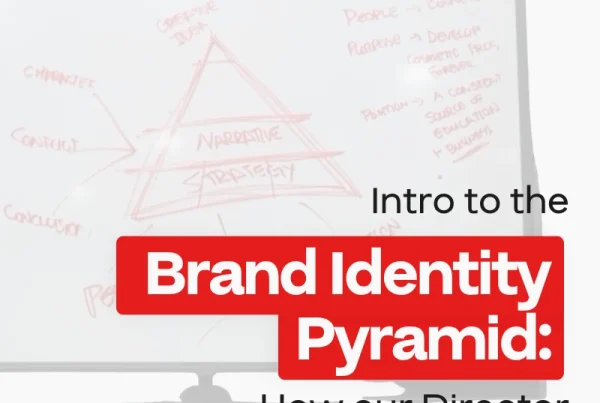
- What “brand DNA,” “brand core,” and visual identity mean in practice
The best branding quotes don’t just inspire—they clarify. They distill decades of marketing wisdom into a single sentence that reframes how you think about your business. Here are 12 of the most powerful branding quotes we return to at Big Red Jelly, with commentary on what each one means in practice.
12 Powerful Branding Quotes to Inspire Your Business
1. “Design is the silent ambassador of your brand.” — Paul Rand
Your brand is the perception your ideal customers have of your business, and design is what shapes that perception silently. As a complementary idea: you only notice design when it’s bad, and never notice it when it’s good. Land on a poorly designed website and you’ll comment on it immediately. Experience a well-designed one and you’ll simply feel trust. Good design earns confidence without announcing itself.
2. “Your brand is a story unfolding across all customer touchpoints.” — Jonah Sachs
Every interaction a customer has with your business—how you answer the phone, how you respond to an email, how your invoice looks, how your team dresses at a client meeting—is a chapter in your brand story. Each one either advances a positive narrative or introduces friction. There is no neutral interaction. Your brand is always being written.
3. “Products are made in a factory, but brands are created in the mind.” — Walter Landor
Your product is manufactured. Your brand is not. It exists in the minds of your customers—shaped by your visual identity, your messaging, your language, your customer service, and every experience they’ve had with you. No factory can produce it. Only you can build it, consistently, over time.
4. “Every interaction, in any form, is branding.” — Seth Godin
Too many business owners treat branding as a logo project. It’s not. It’s the sum of every experience people have with your organization. How your employees treat customers. How your emails are written. How you handle a complaint. How your team represents you at a networking event. Every single one of these is a branding moment. If you want your customers to love your brand, your employees need to love it first.
5. “Your brand is what other people say about you when you’re not in the room.” — Jeff Bezos
You don’t get to declare your own brand. Your customers do. What would your customers say about your business if you weren’t there to hear it? Do they refer their friends? Do they defend you in conversations? Do they rave about you? Your reviews and testimonials—both positive and negative—are the clearest window into what your brand actually is, as opposed to what you intend it to be.
6. “A brand for a company is like a reputation for a person. You earn a reputation by trying to do hard things well.” — Jeff Bezos
Reputation—and brand—is earned through consistent excellence over time. Great customer service is hard. Delivering quality products reliably is hard. Going above and beyond when things go wrong is hard. But these are exactly the things that build a brand strong enough to endure competitive pressure, economic downturns, and market changes.
7. “A brand is no longer what we tell the consumer, it is what consumers tell each other it is.” — Scott Cook
The best sign of a strong brand is not what you say about yourself—it’s referrals. When your customers proactively recommend you to their network, you have built a brand that earns trust on your behalf. Referrals from people who are genuinely enthusiastic about your business are worth more than any marketing campaign you could run.
8. “When you look at a strong brand, you see a promise.” — Jim Mullen
Every interaction a customer has with your brand carries an implicit expectation. Meeting that expectation consistently—regardless of which employee they interact with, which channel they use, which day of the week it is—is what separates a dependable brand from an average one. Your brand promise is the standard you hold yourself to every single day.
9. “The way a company brands itself is everything—it will ultimately decide whether your business survives.” — Sir Richard Branson
In competitive markets and difficult economic climates, brand is what sustains businesses when others fail. Commodities compete on price and convenience. Brands compete on trust, loyalty, and perceived value. In every major economic downturn in modern history, companies with strong brand identities have recovered faster and emerged stronger than those without one.
10. “Within every brand is a product, but not every product is a brand.” — David Ogilvy
You can have a great product and still be a commodity. Apple has great products—but so do many competitors. What makes Apple Apple is not the hardware. It’s the identity, the promise, the experience, and the community built around the product. Ask yourself honestly: are you a product, or are you a brand? Products compete. Brands lead.
11. “The art of marketing is the art of brand building. If you are not a brand, you are a commodity.” — Philip Kotler
Commodities are chosen based on two factors: cheapest and most convenient. If the only reasons your customers choose you are price and proximity, you are operating as a commodity. Brands are chosen for what they represent—the experience, identity, and values they embody. Building a brand means giving your customers a reason to choose you that has nothing to do with being the cheapest option available.
12. “Brand is just a perception, and perception will match reality over time.” — Elon Musk
What your customers believe about your business will eventually become the truth of your business—for better or worse. Consistently deliver excellence and that perception becomes your reality. Consistently underdeliver and that becomes your reputation. This is why building a strong brand requires starting from the foundation: your brand DNA (your purpose and founding vision), your brand core (mission, values, message), and your visual identity and customer experience. At Big Red Jelly, this is exactly the work we do with every client. Learn more about our brand services.
Written by Josh Webber
Frequently Asked Questions: Branding Quotes and Brand Strategy
What is the most famous branding quote?
Jeff Bezos’ quote—“Your brand is what other people say about you when you’re not in the room”—is among the most widely cited in branding. It captures a core truth: you don’t control your brand, your customers do. Their perceptions, conversations, and referrals define your brand more accurately than any tagline or marketing campaign you create.
What do branding experts say about brand identity?
Leading branding thinkers—from Seth Godin to Philip Kotler to Paul Rand—consistently emphasize that brand identity is far more than visual design. It encompasses every customer interaction, the values your organization embodies, the promises you make and keep, and the experience customers have at every touchpoint. Design is the silent ambassador (Paul Rand), but the brand itself is built through behavior, consistency, and the story that unfolds across every customer interaction (Jonah Sachs).
How do these branding quotes apply to small businesses?
Every one of these quotes applies directly to small businesses—often more urgently than to large ones. Small businesses have fewer resources to recover from brand inconsistency or poor reputation. Seth Godin’s “every interaction is branding” is especially relevant: in a small business, every employee interaction, every email, every social post carries significant weight. Jeff Bezos’ point about reputation being earned by doing hard things well is the small business growth model in one sentence.
What is brand DNA?
Brand DNA refers to the foundational purpose and identity that drives everything a brand does—starting with the vision and values of the founders. At Big Red Jelly, we describe brand DNA as your “why”: the original purpose that the business was created to fulfill. It sits beneath the brand core (mission, values, messaging) and the visual identity. When brand DNA is clearly defined and consistently expressed, it creates the kind of authentic brand presence that earns loyalty and referrals.
What is the difference between a brand and a product?
A product is what you make or deliver. A brand is the meaning attached to it. David Ogilvy captured it precisely: within every brand is a product, but not every product is a brand. Apple and Samsung both make smartphones. Apple is a brand; Samsung competes more as a product. The difference is the identity, story, community, and experience Apple has built around its products. Brands command premium pricing, generate loyalty, and survive competitive pressure. Products compete on price and features alone.