Summary:
Who this article is for:
- Brand strategy is step one in a proven 5-step growth process (Brand → Content → Build → Strategy → Grow) — skip it and you’ll pay for it later in costly rework
- A clear, documented brand strategy is the foundation for every marketing, web design, and sales enablement decision your business makes
- Our 10-step brand process turns brand building into a repeatable, measurable system
- Businesses that invest in strong branding before marketing see 33% higher awareness, 23% revenue lifts, and compounding trust over time
Key takeaways:
- Brand strategy is step one in a proven 5-step growth process (Brand → Content → Build → Strategy → Grow) — skip it and you’ll pay for it later in costly rework
- A clear, documented brand strategy is the foundation for every marketing, web design, and sales enablement decision your business makes
- Our 10-step brand process turns brand building into a repeatable, measurable system
- Businesses that invest in strong branding before marketing see 33% higher awareness, 23% revenue lifts, and compounding trust over time
What’s inside:
- What brand strategy is and why it must come before marketing
- Where brand strategy fits in the 5-step proven growth process
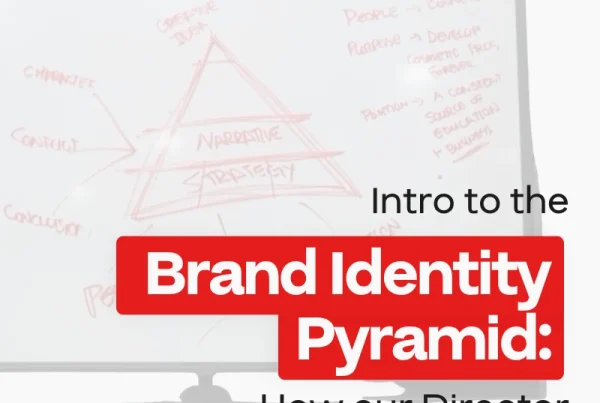
- The full 10-step brand strategy process we use with clients
- How brand strategy powers content, web build, and growth
- Brand strategy for different business types
- How to measure, refine, and sustain your brand strategy over time
Most businesses don’t fail because they lack a great product. They fail because they can’t communicate what makes them worth choosing. A recent study showed that 77% of consumers would not care if 1,800 brands disappeared — meaning the stakes for standing out have never been higher. That’s not a creative problem. It’s a strategy problem. And solving it starts with building a brand strategy that does the heavy lifting before you spend a dollar on ads or redesign your website.
What Is Brand Strategy (and Why It Must Come Before Marketing)
Brand strategy is the long-term plan that defines who you are, who you serve, how you’re different, and how all of that shows up across every customer touchpoint. It’s not a logo. It’s not a color palette. It’s the foundational blueprint that informs every marketing and business decision your company makes.
A comprehensive brand strategy includes:
- Brand positioning: Where you stand in your market relative to competitors
- Brand messaging: The words you use to communicate your value
- Visual identity: The design system that makes you recognizable
- Brand experience: How customers feel at every interaction
When you skip this work and jump straight to ads, the symptoms are predictable: inconsistent messaging across channels, conversion rates stuck at 1–2%, frequent rebrands every 18 months, and acquisition costs 20–30% higher than they need to be. That’s why brand strategy is step one in our 5-step proven process. Everything else builds on this foundation.
Where Brand Strategy Fits in Our 5-Step Proven Growth Process
Too many businesses skip straight to marketing and advertising without first developing the growth foundation necessary. Our proven process develops the brand positioning and online foundation that any company needs to accelerate business success.
- Brand: Your brand is the foundation. A great brand increases awareness, recognition, and loyalty. This phase covers discovery, positioning, messaging, visual identity, and documentation.
- Content: Your new brand empowers your content and marketing efforts. You’ll have the assets, creative, templates, and messaging to cut through the noise and attract more customers.

3. Build: We develop a world-class website integrated with online tools. Research-backed designs increase conversion rates with stunning execution.
4. Strategy: Your dedicated growth strategist helps you get started on your path of growth with the right marketing tools, partners, and resources. Brand rollout, marketing strategy, and training ensure your team is autonomous and confident.
5. Grow: By intertwining brand alignment, marketing and advertising, and sales enablement, the Grow phase provides a comprehensive approach to modern marketing. SEO, ads, and sales acceleration reinforce your brand equity instead of diluting it.
Brand feeds Content with messaging frameworks and asset libraries that make campaigns 3x faster. Content and Brand inform Build by shaping sitemap architecture and UX flows. A strong foundation enables effective Strategy. All four phases unlock Grow: compounding SEO, ads, email, and sales enablement built on a stable brand core.
The 10-Step Brand Strategy Process We Use With Clients
Since the late 2010s, we’ve refined a repeatable 10-step brand process across work with 1,000+ businesses. It’s both art and science: flexible enough to adapt to your industry while rigorous enough to produce consistent, measurable results.
| Step | Focus |
|---|---|
| 1. Brand Discovery | Stakeholder workshops, founder interviews, internal audits |
| 2. Brand Research | Competitive analysis, market trends, audience insights |
| 3. Guiding Idea | A single strategic phrase capturing your role in the customer’s life |
| 4. Brand DNA | Purpose, vision, values, and personality that stay stable as you grow |
| 5. Brand Core | Distilled positioning: who you serve, what you offer, why it matters |
| 6. Brand Messaging | Value prop, tagline, elevator pitch, messaging pillars |
| 7. Visual Identity | Logo system, colors, typography, imagery style |
| 8. Brand IP | Proprietary frameworks, signature visuals, unique phrases |
| 9. Execution & Assets | Brand kits, templates, sales materials, social assets |
| 10. Brand Guide | Living manual documenting all strategic and visual decisions |
The same 10 steps flex by industry. A B2B SaaS company might emphasize thought leadership messaging. A DTC brand prioritizes lifestyle visuals. A local service business focuses on review-optimized local SEO differentiation. The framework stays consistent; the execution adapts.
Steps 1–2: Brand Discovery and Research

Discovery and Research form the “listening” phase, typically spanning 2–4 weeks. This is where you gather the raw material that every strategic decision will build on. Nearly 60% of consumers believe businesses need to better understand and address their needs — this phase addresses that directly.
Brand Discovery involves:
- Stakeholder workshops with leadership and key team members
- Founder interviews exploring origin story, vision, and non-negotiables
- Customer interviews revealing real language, pain points, and decision factors
- Audits of current assets: website, decks, social profiles, sales scripts
Brand Research deploys:
- Competitive analysis of 3–7 direct competitors using tools like SEMrush for share-of-voice gaps
- Market trend analysis identifying current shifts in your category
- Keyword and search intent data showing how your audience actually searches
- Review mining to surface unmet needs and friction points
- Social listening tracking sentiment and engagement patterns
Mapping the competitive landscape helps identify underserved niches or customer needs that competitors are missing. Regularly monitoring competitors and adjusting your strategy accordingly can help maintain a strong, differentiated brand identity in a competitive market.
Steps 3–5: Guiding Idea, Brand DNA, and Brand Core
This phase translates raw insights into a clear strategic north star. It’s where scattered data becomes a coherent brand story that can guide decisions for years.
Guiding Idea: A single, memorable strategic phrase that captures the brand’s role in the customer’s life — not a public tagline, but an internal compass. Examples: “Frictionless futures” for a fintech SaaS, “Empower everyday athletes” for a fitness app, “Simplify the complex” for a B2B consultancy.

Brand DNA locks in the essential traits that must stay stable as you grow:
- Brand purpose: The existential reason you exist beyond profit
- Brand vision: Where you see the company in 3–5 years
- Brand values: 3–5 behavioral principles that guide decisions
- Brand personality: The brand’s human characteristics — warm, bold, analytical, playful
Brand Core is the distilled articulation of who you serve, what you offer, why it matters, and how you’re different. It often takes the form of a positioning statement: “For [audience] who [need], [brand] is [category] that [benefit] unlike [competitors] because [difference].” Effective brand positioning helps businesses differentiate themselves and capture their target audience by clearly communicating what makes them unique.
Step 6: Brand Messaging That Converts

Messaging is where brand strategy becomes words — what appears on your website, in sales decks, across ads, and through email campaigns. Key components:
- Value proposition: The core benefit you deliver (e.g., “Cut onboarding time by 77%”)
- Elevator pitch: A 15-second hook explaining who you help and how
- Tagline: A memorable phrase for external use
- Messaging pillars: 3–5 recurring themes anchored in real customer outcomes
77% of customers prefer to buy from brands with the same values as them — creating a message that resonates with your target audience is paramount. Clarity beats cleverness: replace vague claims (“We’re innovative”) with specific outcomes (“We cut onboarding from 30 days to 7”). According to Adobe benchmarks, clear outcome-focused messaging boosts AOV by 15–20%.
Step 7: Visual Identity That Matches Your Strategy
Design should follow strategy, not lead it. Your visual identity must reflect your positioning and meet your target market’s expectations. Key components include your logo system, color palette (4–6 colors), typography hierarchy, layout style, iconography, and imagery style. Non-negotiables for modern brands: WCAG AA accessibility contrast ratios, responsive usage across mobile/desktop/print, and a logo that reads at both favicon and billboard scale. Consistency across channels lifts brand recognition 4x according to Lucidpress research.
Steps 8–9: Brand IP, Execution, and Assets
This is the “make it real” phase where strategy turns into reusable, ownable assets that speed up all future marketing.
Brand IP includes proprietary, recognizable elements: domains, social handles, named frameworks, signature visual motifs, coined terms, and methodologies customers reference when recommending you.
Execution & Assets delivers concrete deliverables:
- Brand kits with Figma libraries and design files
- Slide deck templates for sales and investor presentations
- Social media templates sized for each platform
- Email signature systems
- Sales one-pagers and leave-behind materials

These assets bridge directly into Content and Build phases. This approach has accelerated market entry by 40% for prepared foundations versus companies scrambling to create assets after strategy is complete.
Step 10: The Brand Guide (Your Operating Manual)
The Brand Guide is the single source of truth combining all strategic and visual decisions. It ensures your brand shows up consistently whether a designer in-house, a freelancer overseas, or a new marketing hire is doing the work. A well-maintained Brand Guide makes it easy to stay on-brand without constant approvals — companies using digital, accessible brand guides see off-brand output reduced by 80%.
Host the guide online with a clear URL, link to downloadable logo files and templates, and set a single owner responsible for approvals and updates. Update it at least annually. See our Brand services to learn how we build yours.
How Brand Strategy Powers Content, Web Build, and Growth
A completed brand strategy isn’t an endpoint — it’s the infrastructure that makes everything downstream work better.
- Brand → Content: Clear positioning informs editorial themes. Messaging frameworks give copywriters the language to use. Asset libraries make production 3x faster. Your brand story becomes a repeatable narrative across blog posts, social, and email.
- Brand → Build: Persona insights shape sitemap structure. Brand messaging guides on-page copy that addresses specific objections. Visual identity informs UX/UI decisions. The result: websites with 15–25% higher conversion rates because they’re built on strategy, not guesswork.
- Brand → Strategy: Channel selection matches where your target audience actually spends time. Campaign ideas flow from messaging pillars. KPIs connect to brand aims rather than vanity metrics. Your marketing strategy finally has a compass.
- Brand → Grow: The Grow phase — ongoing SEO, paid ads, email, and sales enablement — reinforces brand equity instead of diluting it. Consistent branding correlates to 2–3x ROI according to Epsilon data. Demand Metric studies show consistent branding lifts revenue by 23%.
Building a Brand Strategy for Different Business Types
Core principles stay the same. Execution varies based on how your customers perceive value and make decisions.
- B2C Brands: Consumer brands thrive on emotional branding and lifestyle storytelling. Focus on social-first content, user-generated content programs, loyalty programs, and visual identity that photographs well.
- B2B Brands: Business buyers need thought leadership content, trust signals, and case studies. Focus on educational content, customer success stories with measurable outcomes, sales enablement materials, and longer nurture sequences matching 6–18 month sales cycles.
- SMEs and Local Services: Smaller businesses win through community connection, reviews, and clear differentiation against national chains. Focus on local SEO, review generation, “us vs. the big guys” positioning, and owner visibility.
Measuring, Analyzing, and Refining Your Brand Strategy
Brand strategy is a continuous process. Set it and forget it is not an option.
| Metric | Target / Benchmark |
|---|---|
| Branded search volume | >20% growth QoQ |
| Direct traffic | 10–15% of total traffic |
| Conversion rate | 2–5% improvement post-rebrand |
| NPS | >50 |
| Lead quality scores | Improving trend |
| Sales cycle length | 20% reduction |
Qualitative signals matter too: customers using your language in reviews, sales feedback that prospects arrive “pre-sold,” and social sentiment tracking (aim for 80%+ positive). Plan for a light review annually and a deeper review every 2–3 years, or after major events like new leadership, a product pivot, or competitive disruption. Avoid constant reactive tweaks that erode 15–20% of brand equity. Check our free brand audit resources to see where you stand today.
Brand Strategy Best Practices in 2026
- Internal alignment is non-negotiable. Involve leadership, marketing, sales, and operations early so the brand is lived, not just designed. Companies with 90% leadership buy-in see double the adoption rate of new brand guidelines.
- Ensure brand consistency across every touchpoint. Website, product, customer service, hiring, and internal culture should all reflect the same brand core. This lifts CSAT scores by 15%.
- Build emotional connection through specifics. Specific, relatable narratives create loyal customers. Abstract values don’t.
- Use data to validate decisions. A/B testing brand messaging before full rollout reduces risk. Search trends, analytics, and customer insights should inform — not replace — intuition.
- Plan for brand development over time. Build systems for ongoing refinement, measurement, and evolution as your market position and business objectives shift.
The businesses that grow fastest share one thing: a brand their customers trust. That trust isn’t luck — it’s the result of deliberate strategy executed consistently over time. Ready to build a brand that powers your content, web, and growth? That’s exactly what we do.
Frequently Asked Questions About Brand Strategy
How long does it typically take to build a full brand strategy using this 10-step process?
For smaller businesses with streamlined decision-making, expect 4–8 weeks. Complex organizations with multiple stakeholders, product lines, or geographic markets typically need 8–12+ weeks. The main variables are stakeholder availability, research depth, and number of decision-makers who need to align. While visual identity can be produced quickly, the strategic work (Discovery, Research, Brand DNA, Messaging) should not be rushed if you want results that last.
Can I update my brand strategy without doing a full rebrand?
Absolutely. Many companies perform a “brand refresh” rather than a complete rebrand — updating messaging, visuals, or specific brand identity elements while keeping the core intact. A refresh is appropriate when entering a new market or launching a new product line. A deeper rebrand becomes necessary when targeting a totally new audience, going through a merger, or recovering from reputation issues. A good Brand Guide makes incremental updates much easier to manage.
How do I know if my current brand strategy is actually working?
Look for these signals of a healthy brand: consistent messaging across all marketing materials, higher-quality leads that fit your ideal customer profile, improved close rates and shorter sales cycles, and more inbound referrals from engaged customers. Monitor branded search growth, direct traffic, organic conversion rates, and retention rates over 6–12 months. If results are stagnant despite active marketing spend, it may signal a weak or misaligned brand strategy that needs revisiting.
What if I don't have a big team or budget — can I still build a useful brand strategy?
Smaller teams can absolutely build a lean but effective brand strategy by focusing on essentials: a clear target audience definition, simple positioning, and consistent messaging and visuals. Prioritize a short, practical Brand Guide over elaborate documents. Even a 10-page guide covering positioning, voice, and visual basics keeps small teams consistent. For small businesses, clarity and consistency often matter more than high production value or large campaign budgets.
How often should I revisit or revise my brand strategy?
Plan for a light review annually to ensure messaging, visuals, and positioning still match your market and business goals. Schedule a deeper review every 2–3 years or after major events: new leadership, major product pivot, entering a new geography, or significant competitive shifts. Avoid constant reactive tweaks that confuse customers and erode brand loyalty — thoughtful, occasional updates preserve brand equity while keeping you relevant.