The Big Red Jelly team just returned from WordCamp US 2026 in Phoenix, Arizona and I’m… confused?
Big Red Jelly and WordPress
Big Red Jelly has been offering WordPress as one of the content management systems (CMS) for our website and marketing clients for almost a decade. The platform is perfect for business that want to scale, and scale fast. It offers basically unlimited flexibility in design, structure, and functionality with a giant library of plugins from third-party developers, themes and page builders to make managing and updating your website’s pages easier, and so much more.
One of the most attractive “features” of WordPress for myself, and for Big Red Jelly, is that it’s open source. We’ve used this as a selling point for our clients since day one. When you make your website, you actually OWN the site. In the words of woocommerce (owned by Automattic, which owns wordpress.com), “It’s yours, truly”. You’re never in danger of running up against some terms and conditions of your CMS, or that company going out of business and your website going with it, or technical issue that takes down all the sites from that CMS provider. You get to own the code, change the code, share the code, move your site to whatever hosting provider you want. It makes it easier for you to transfer ownership, make duplicates, and most importantly, you get to decide on the performance of the hosting, speed, and performance of your website. It’s truly beautiful.

Why WordCamp US 2026 Was Different
I’ve been attending WordCamp US since 2022, in San Diego, when we were invited by a business partner and friend. That first WordCamp ignited a passion in me for the open source movement and the WordPress project. Every year since, I’ve left WordCamp reinvigorated, motivated, inspired, and connected with other WordPress enthusiasts which has sometimes resulted in big boosts for our business as a whole.
I don’t have the exact numbers for actual attendees this year vs previous years. Or data on the more qualitative points like how much networking is done or new relationships formed, but this year felt…. bleak. Many of our partners who we’ve seen in past years decided not to come and the speaker halls felt mostly empty during the talks (except Matt’s keynote). On the last day, I left feeling discouraged, , confused, disheartened by the state of the project that I’ve come to be so passionate about, maybe even frustrated with what many in the community are choosing to prioritize. The organized networking events felt half-baked, the sponsor hall seemed empty and absent of big names like GoDaddy and of course WPEngine (we won’t get into that).
So, there’s something in the water. And I think that something is AI. We’re seeing new CMSs like Lovable appear and start generating hundreds of millions of dollar in what seems like an overnight success. Other, closed source, providers are really leaning into the AI boom and offering almost complete site generation based on a few prompts and branding materials, like Wix, for example. Being closed source offers them the absolute autonomy to choose how to run their businesses, which functions and features they want to prioritize, and I think this is what is hindering WordPress’s ability to adapt to the AI landscape as fast as their “competitors”.
Even during the final keynote with Matt Mullenweg you could tell that many others were almost anti-ai, though I didn’t get that impression from Matt. In fact, Matt defended the development and expansion of data centers and I 100% agree with the points he made on those. There were other, less serious issues with that last day; presentation issues, timing issues, co-host issues…
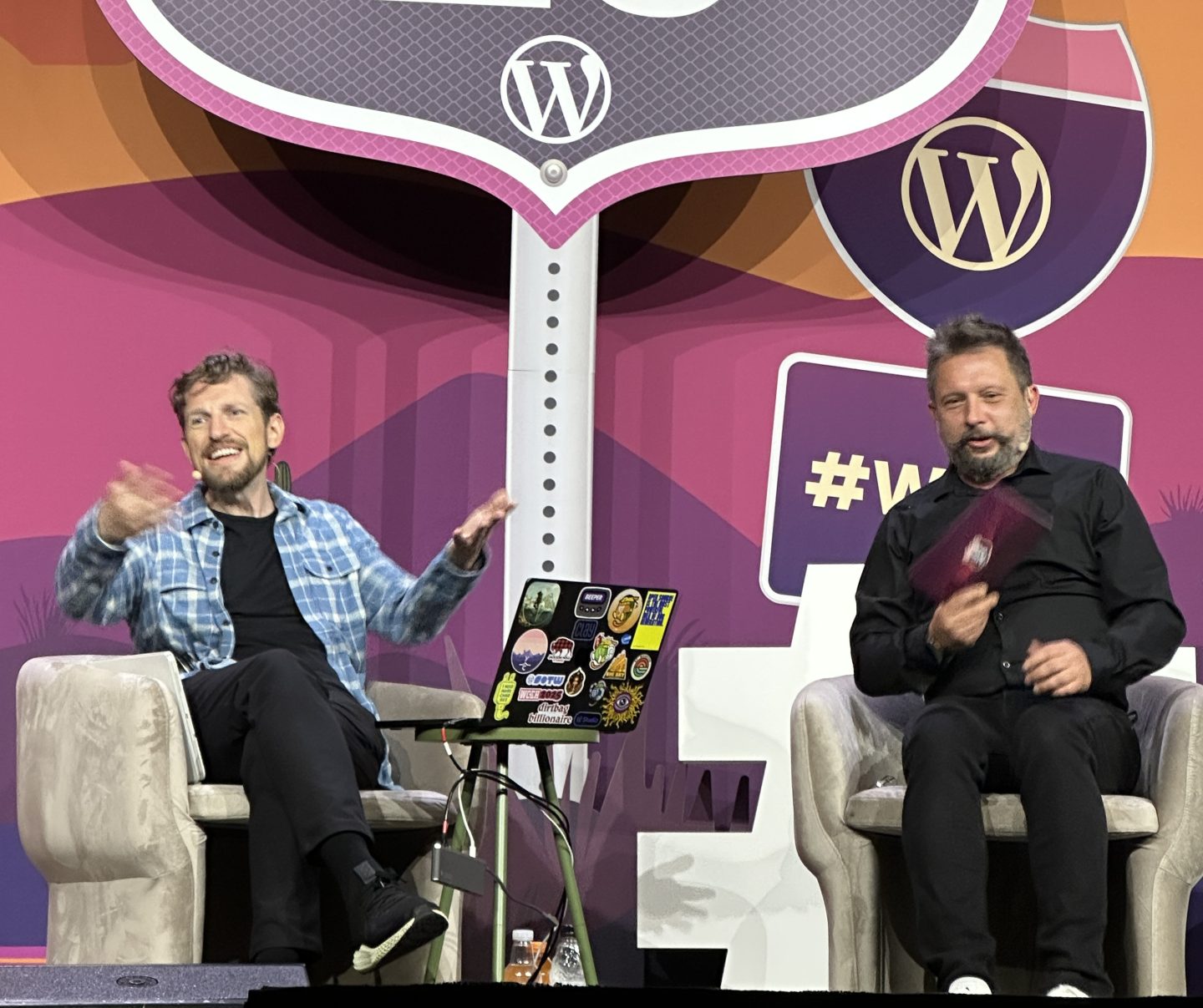
You can see it in the Q&As, the talks, and side conversations you overhear at WordCamp. Wordcampers had valid concerns about AI hurting the job market, displacing jobs in their own industries like design and development, environment concerns with AI usage, etc. etc. etc. And these concerns have taken priority in the WordCamp community and has, in my opinion, led many of those who contribute to the open source project to be hesitant to fully lean into what many user are asking for; end-to-end ease of use for a website tool.
Where The Innovation Will Come From
Because of the nature of the open source project, anybody who wants to contribute, can. WordPress’s eventual advancements to be more integrated end-to-end with AI is not going to come from the core updates. Instead, it’s going to come from private, third party companies who offer the portals and platforms for users to spin up sites with a prompt, create pages and designs with natural language, and design full sites with only their voice.
The metaphorical pie is huge. WordPress has an estimated 450 million (ish) active sites and powers about 40% of all the websites on the internet. I don’t think it’s going anywhere, but in order to stay relevant, it has to change. The community has to embrace that the industry and market think that AI is the future, and to ignore that is like thinking that BlockBuster will never go out of business because of RedBox. Or that RedBox will stay relevant when Netflix came around. You have to innovate or die.
Now, this isn’t all doom and gloom. There’s still plenty of time and lots of hope. That hope comes from the fact that literally anybody can make this change and push the project in the right direction. Will that be Big Red Jelly? I won’t give out any spoilers…. but stay tuned.

My Takeaways From WordCamp US 2026
All of that being said, I still found value in the conference, even if it wasn’t the same quantity or quality that I typically have experienced. Here are my biggest takeaways from the conference and what I’m looking out for in the digital marketing and website design industries.
- The client experience and client happiness will mean more now than ever. With new shiny tools that WILL be able to do just a good a job in your industry. Communicating the decisions being made, the strategy behind it, the creativity that guided it, is what will be valuable to the customers.
- Embrace change. If tools, softwares, platforms, strategies, ways of thinking etc. can’t keep up. Make the decision to evolve. Innovate or die.
- BIG change can come from very small budgets and very small teams. Don’t underestimate the potency of a project, product, or company based on it’s age or size. There are going to be single person billion dollar companies very very soon….
- Build a brand. Not a product. Products are going to be commoditized, brands cannot. What makes you different? Do your customers get the fuzzy feelings when they get your product or interact with your company? When your service or digital product can be created so cheaply that it’s almost free, you have to be able to sell something else.
In a weird way, this is my love letter to WordPress. I cut my teeth in digital marketing and web design on WordPress sites, and I want to see it continue to be the preferred choice of our customers for many years to come.